
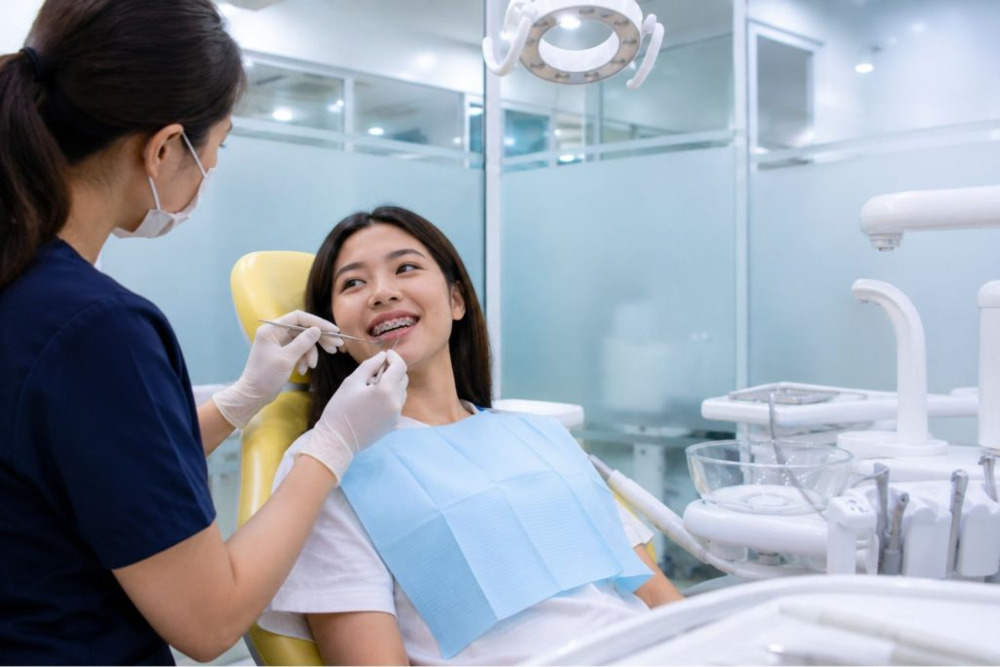
Braces cause pressure and soreness rather than sharp pain, and most patients settle into the sensation within the first week.
The question “Do braces hurt?” is a common one patients ask before orthodontic treatment. Patients considering braces or Invisalign want a clear idea of what to expect at each stage of treatment, rather than vague reassurance.
Brace Yourself Orthodontics, with experienced orthodontists in Penang, explains what to expect at each stage and helps patients prepare for a more comfortable treatment experience.
What Causes the Soreness You Feel With Braces
Braces can feel sore because they gently move your teeth into a new position. The pressure from the brackets and wires moves the teeth through the bone, which can cause temporary soreness as your mouth adjusts.
This soreness usually settles within a few days as the teeth adjust to the pressure. The British Orthodontic Society explains that biological changes around the tooth roots allow teeth to move during orthodontic treatment.
Brace Yourself Orthodontics can adjust the braces based on your treatment needs, helping guide tooth movement while managing the pressure applied to your teeth.
Book a consultation with Brace Yourself to discuss your treatment needs and braces options.
Do Braces Hurt? The Pain Timeline, Stage by Stage
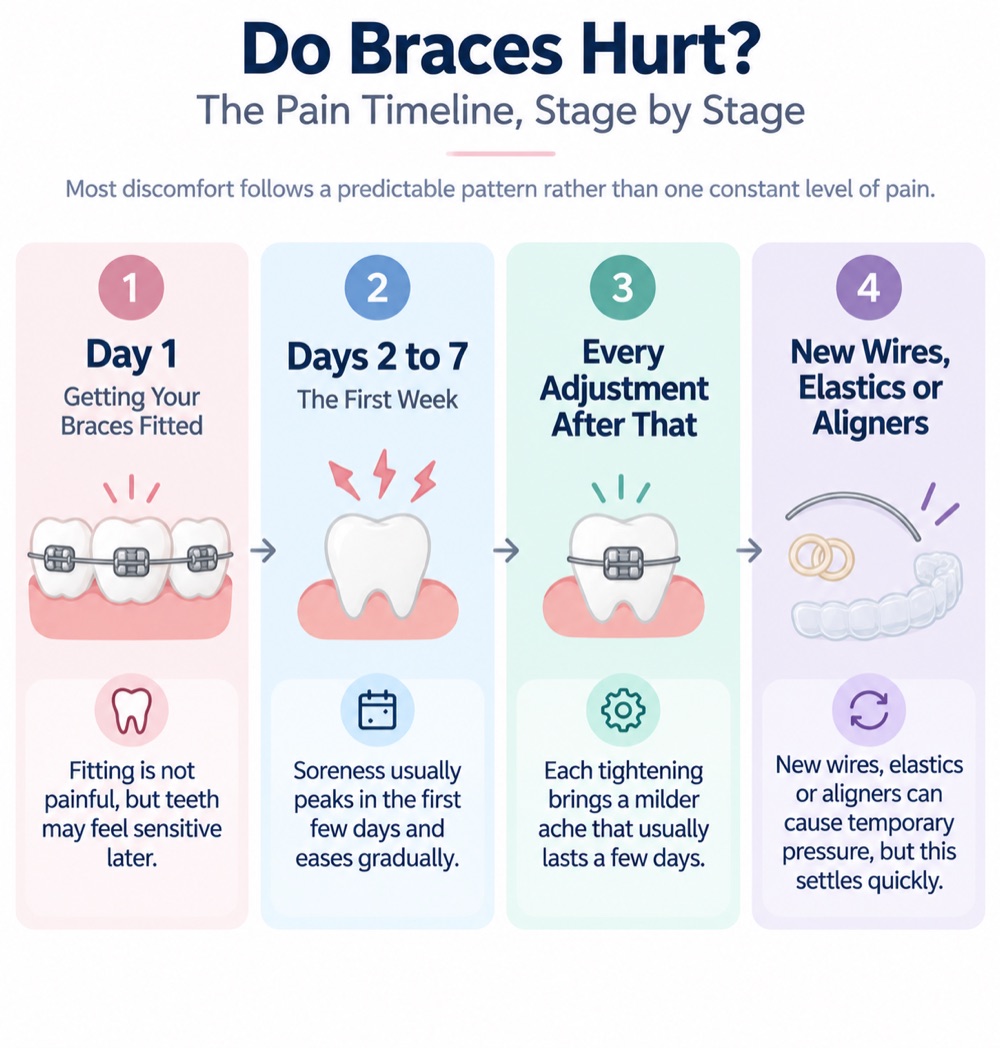
Most discomfort follows a predictable pattern rather than one constant level of pain.
Day 1: Getting Your Braces Fitted
The fitting appointment itself is not painful, since no drilling or injections are involved, though your teeth feel unusually sensitive within a few hours of the brackets going on.
Lips and cheeks also feel raw from rubbing against new brackets until the mouth toughens up.
Days 2 to 7: The First Week
Soreness typically peaks between 24 and 72 hours after fitting and eases steadily over the following days.
Chewing firmer foods is usually the most uncomfortable part of this stage, so soft foods for the first 3 to 5 days help considerably.
Every Adjustment After That
Each follow-up visit brings routine tightening that produces a milder version of the same ache, typically lasting 2 to 4 days instead of a full week, since the teeth are already partway through their movement.
New Wires, Elastics or Aligners
A thicker wire, new elastics or a new Invisalign aligner can bring back a day or two of pressure. However, this settles faster than the original fitting because the mouth has already adapted to orthodontic forces.
What Makes Braces Pain Feel Worse for Some Patients
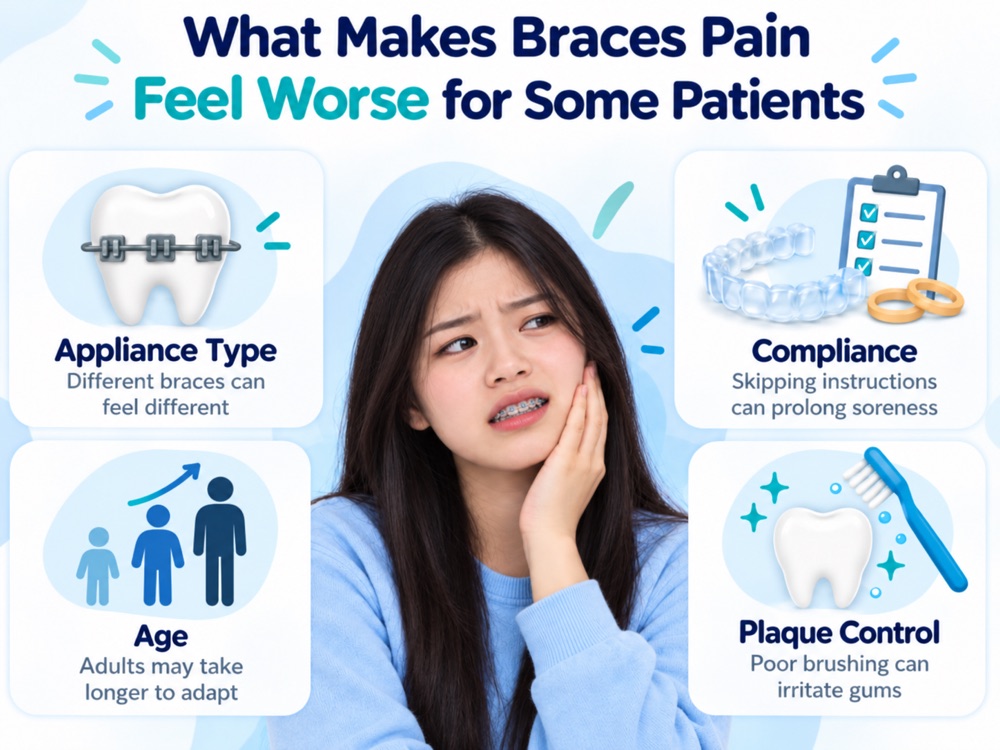
Individual pain tolerance varies, but a few practical factors also make a difference:
- Appliance type: Metal braces, ceramic braces and Damon self-ligating braces produce broadly similar sensations, though Damon’s low-friction brackets can mean gentler forces at later visits.
- Compliance with instructions: Patients who skip elastics or remove Invisalign aligners early often extend treatment and repeat the discomfort of restarting a movement.
- Age: Children and teenagers often adapt to the sensation faster than adults, whose bone remodels more slowly.
- Plaque control: Buildup around brackets from inconsistent brushing increases gum irritation, which compounds ordinary tooth-movement soreness.
Patients concerned about braces discomfort can also explore teeth straightening without braces to compare other treatment options.
How to Manage Braces Pain at Home
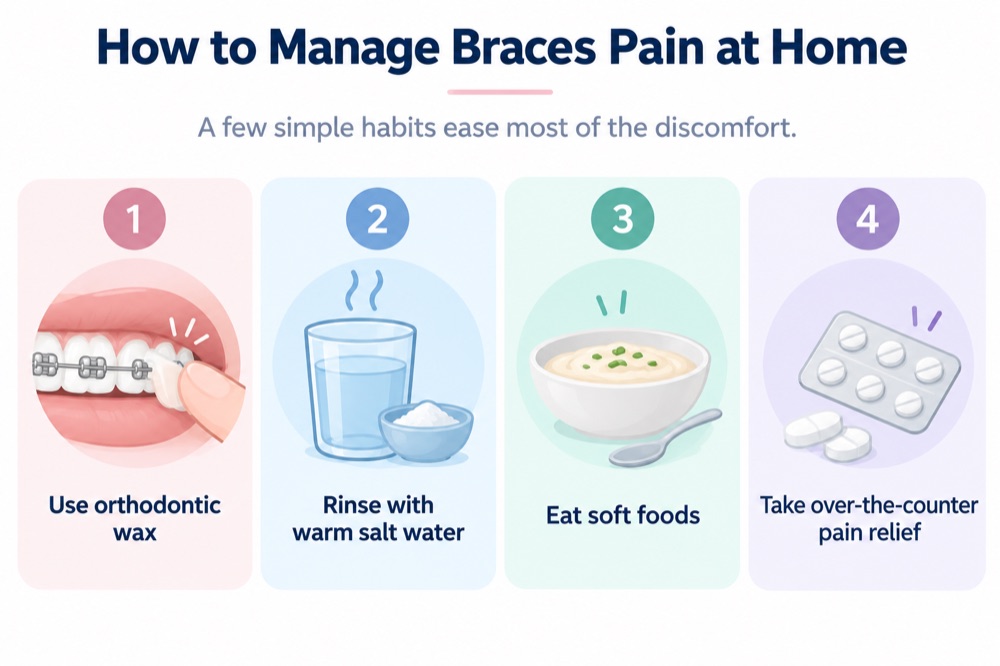
A few simple habits ease most of the discomfort described above:
- Press orthodontic wax over any bracket rubbing against the cheek or lip, reapplying every 4 to 6 hours as needed.
- Rinse with warm salt water two to three times a day to soothe irritated gum tissue.
- Stick to soft foods such as soup, rice porridge, eggs and steamed fish for the first 3 to 5 days after any adjustment.
- Take over-the-counter pain relief according to the packaging instructions if soreness affects eating or sleeping.
The American Association of Orthodontists notes that soreness after a braces adjustment is temporary and generally settles within a few days, although the experience varies between patients.
Arrange a free consultation with Brace Yourself Orthodontics today for a personalised comfort plan before starting treatment.
When Braces Pain Signals a Problem
Ordinary soreness settles within a week, so a few signs mean the discomfort needs a clinical check rather than home care:
- Pain that has not improved after 5 to 7 days
- A loose, broken or protruding bracket or wire
- A mouth ulcer that does not heal within a week
- Swelling, fever or pain that gets worse rather than better
Brace Yourself Orthodontics in Penang offers a same-week review for any of these signs, so patients are never left guessing whether pain is normal.
How Brace Yourself Orthodontics Makes Treatment More Comfortable
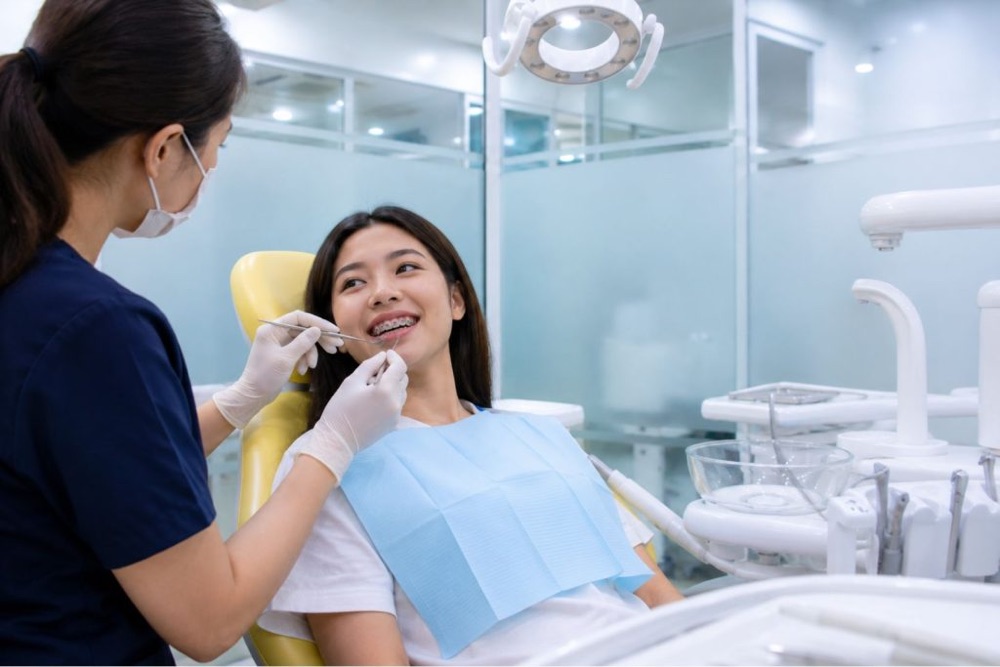
Brace Yourself provides specialist-led orthodontic treatment planning to help patients understand their treatment, expected discomfort and aftercare.
- Personalised assessment: Each case is reviewed based on the patient’s bite and tooth movement needs.
- Treatment options: Patients can choose from metal braces, ceramic braces, Invisalign clear aligners and Damon braces in Penang.
- Digital planning: An iTero digital scan can support treatment planning and help clarify expected appointment timing.
- Dental care: Dental scaling and polishing can help maintain oral hygiene during orthodontic treatment.
- Retainer planning: Patients can learn about dental retainer types and care instructions before completing active treatment.
Start Braces With a Clear Treatment Plan
Braces pain follows a predictable pattern of pressure and soreness that peaks in the first few days after fitting or adjustment and settles on its own soon after.
Brace Yourself Orthodontics in Penang manages this process through specialist-led treatment planning, helping patients understand what to expect before starting with braces or aligners.
Book your free consultation with Brace Yourself today to have your bite assessed and start treatment with a clear, comfortable plan.
Frequently Asked Questions About “Do Braces Hurt?”
Mild soreness usually peaks within 24 hours and eases within 3 to 5 days after an adjustment at Brace Yourself.
Both braces and Invisalign can cause temporary pressure or soreness as your teeth move, and Brace Yourself can explain what to expect during your consultation.
Soft foods, warm salt water rinses and orthodontic wax can help ease discomfort after a braces adjustment.
Ceramic, Damon and metal braces can all cause temporary discomfort, so Brace Yourself will recommend an option based on your bite and treatment needs.
Contact Brace Yourself if pain does not improve after several days or you have a loose bracket, wire or persistent mouth ulcer.
Most children adapt to braces discomfort within a few days, while Brace Yourself can assess their dental development and treatment needs before starting orthodontic care.
